How ODEN connects sourcing decisions to factory follow-up and shipment readiness.
Buyers often see a quotation sheet first, but the real outcome of a project depends on what happens after the quotation. Once the work moves into sample review, production planning, and shipment coordination, product selection becomes workflow management.
Why category planning is not enough on its own
A buyer may already know the category direction they want. Garden tools, seasonal utility items, or planting accessories can all look simple on a category page, but the harder part usually starts after those items need to move through one practical sourcing process.
If a page only shows products and says nothing about execution, the buyer understands selection but not delivery logic. That gap often creates repeated clarification, delayed approvals, and weak expectation management.
What buyers usually underestimate
The common assumption is that once the right product is found, the project is already halfway done. In reality, the second half is often harder because specification alignment, packaging details, supplier follow-up, and timing start overlapping.
- Sample revisions can affect timing more than the original quotation.
- Packaging decisions can shift cost and carton structure unexpectedly.
- Mixed programs need coordination, not just item-level communication.
How factory visibility improves communication
When buyers can connect sourcing discussions to real factory workflow, communication becomes more specific. It is easier to explain why an adjustment matters, where a delay might happen, and which details really affect output quality.
Visibility does not mean showing everything. It means showing the parts of execution that help a buyer make better decisions earlier.
That is also why article content works well on a sourcing website. It can explain the operational side of a project, not only the visual side of the products.
From abstract promise to useful explanation
Phrases like "strict quality control" or "fast delivery" are common on supplier websites, but they are often too abstract to be persuasive. Strong article content explains what those phrases actually mean inside a real workflow.
For example, quality control becomes easier to understand when the article shows how sample confirmation, production checkpoints, and shipment readiness are connected, instead of repeating a broad claim.
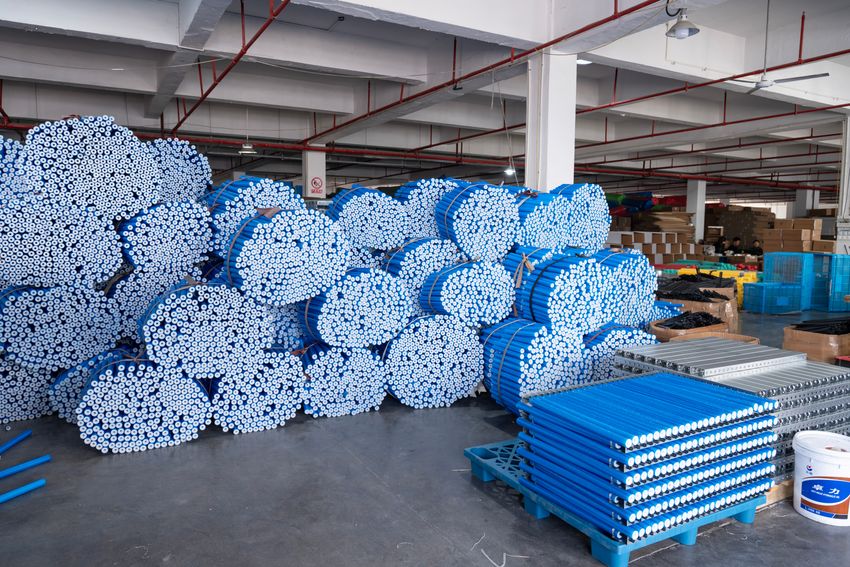 Factory visibility helps buyers understand how sourcing planning connects to actual execution.
What article content should do on a B2B sourcing site
A sourcing article should not behave like a generic SEO post. Its real job is to reduce uncertainty and move a buyer one step closer to a commercially useful conversation.
On a page like this, the content helps explain how ODEN thinks about category planning, supplier coordination, and shipment follow-through. If that explanation is clear, the move into inquiry becomes easier and more natural.
The role of content hierarchy
Good hierarchy helps readers scan quickly, and it also creates the heading structure that the left-hand table of contents can extract automatically. That is exactly why the TOC on this page is generated from the article body rather than typed manually.
Once the heading structure is stable, the same pattern can later be reused in WordPress with dynamic content fields and the same JavaScript behavior.
Why this template matters for the next pages
This page is not only for one sample article. It is also a reusable structure for the later blog detail pages. You can swap the hero content, article copy, cover image, and related links while keeping the same reading layout and auto-generated navigation.
That gives you a stable editorial system: list page, category page, and detail page can all share one visual language while still letting each article carry its own structure.
What can become dynamic later
When this moves into WordPress, the article title, date, category, cover image, content, and related articles can all become fields. The TOC behavior can remain almost unchanged because it depends on the final rendered headings in the article body.
Conclusion
A sourcing site should show products clearly, but it should also explain how execution works. Article detail pages are a strong place to do that. They help buyers understand process, reduce uncertainty, and move into inquiry with better expectations.
For this first version, the most important technical point is already ready: the left table of contents is generated by JavaScript from the real headings in the content body, so the page stays maintainable as the article changes.